
Lunchboxes
Summary
- Pack enough food so that your child can eat until they are satisfied.
- You choose what to pack. Your child will choose what to eat.
- Include mostly foods your child knows and has eaten before.
- Provide a ‘good enough’ lunchbox – it doesn’t need to be perfect.
On this page
- What to pack
- How much to pack
- Lunchboxes and feeding roles
- The ‘good enough’ lunchbox
- Food safety
- Lunchbox resources
A guide to easing lunchbox pressure for both you and your child
What to pack
Pack mostly foods that your child is familiar with (these are called accepted foods).
Also try including a new or less familiar food. Children’s diets become more varied as they get used to new foods. This often happens after a food has been offered many times.
The lunchbox is a good opportunity to provide a variety of foods; but you don’t have to include all five foods groups every day. There are other opportunities at breakfast, dinner and on weekends to offer more variety. You can use the Australian Guide to Healthy Eating as a guide to help you decide what to pack… but remember how much your child eats is up to them.
Water is the best drink for children at school. Packing a refillable water bottle in the lunchbox will help keep your child hydrated. Children don’t need juice, cordial, soft drinks or caffeinated drinks in their lunchbox.
You may also need to check the service or school nutrition policy for guidance on what foods can be sent in the lunchbox.
How much to pack
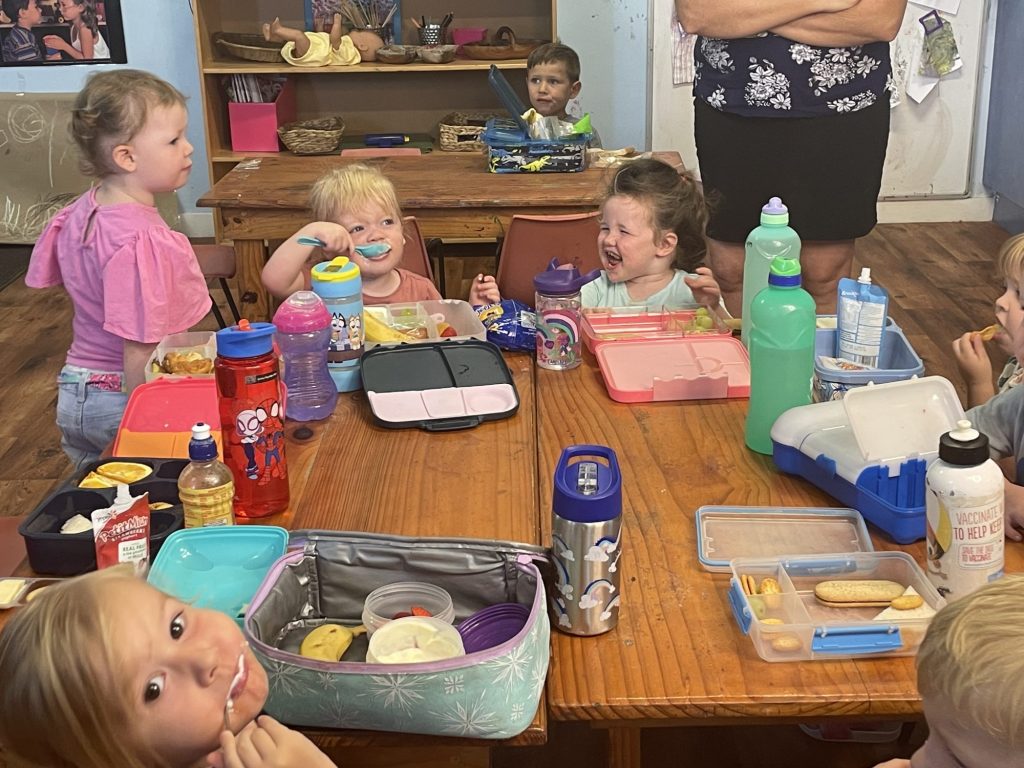
Children’s appetite and eating can go up and down – over a day, or between days. Packing the right amount of food can be tricky and you won’t always get it right. The goal is to pack enough food so that your child can eat until they are satisfied but not so much that you are always wasting food.
Some days the lunchbox will come home full, but your child will make up for it at other meals. If this happens regularly, pack a bit less next time.
Some days the lunch box will come home empty, and your child will complain that they didn’t have enough food, but your child will make up for it at afternoon tea or dinner. If this happens, pack more food or more filling foods next time.
If you notice that your child’s intake suddenly changes, it can be helpful to check in with their educator.
Lunchboxes and feeding roles
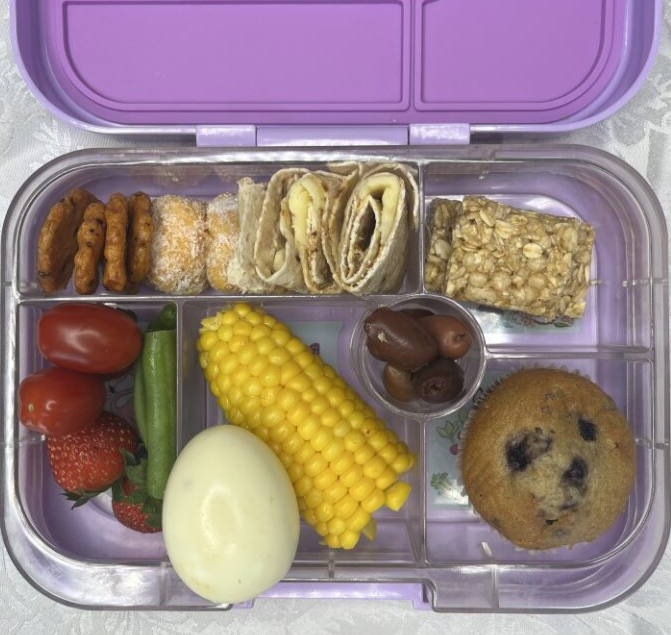
Your role is to decide what goes into your child’s lunchbox. Offering them choices (e.g. ‘Would you like an apple or an orange?’) can help children feel involved and give them some control.
Your child’s role is to choose what they eat from what you have provided. This helps children to build a healthy relationship with food and eat to their appetite.
You choose what to pack. Your child will choose what to eat.
The ‘good enough’ lunchbox
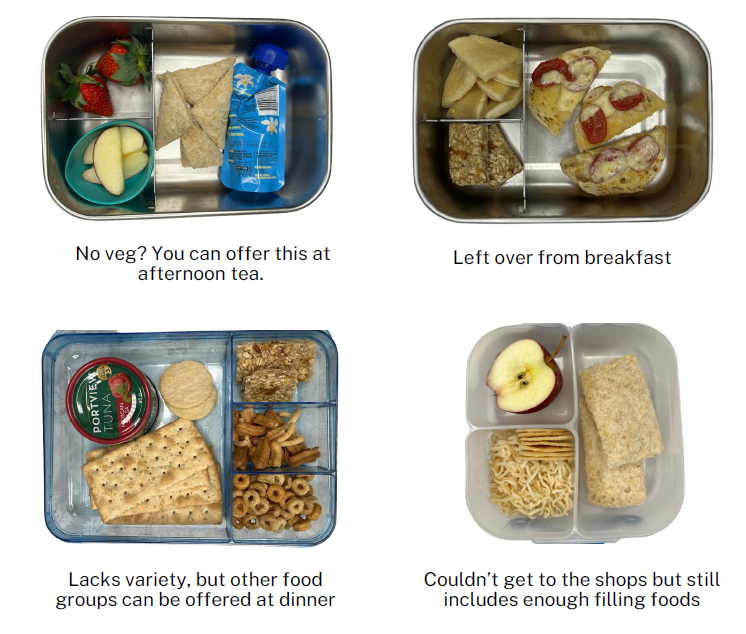
… has enough food in it for your child to feel full.
Food safety
It is important to keep lunchboxes cool, as the bacteria that cause food poisoning grow quickly at room temperature. Here are some tips to keep lunchboxes cool:
- Use insulated lunchboxes or cooler bags.
- If no fridge is available, pack a frozen drink bottle or freezer brick inside the lunch box or bag, next to foods that should be kept cold. You can freeze a half-filled water bottle, then top up with cold water before school so there’s water for your child to drink.
- If making lunches ahead of time, keep them in the fridge until leaving for daycare or school or freeze them in advance.
- Where possible, ask children to keep packed lunches in their school bag and to keep their bag out of direct sunlight.
Lunchbox resources
View and print our PICNIC lunchbox guide (pdf)
Remember… every child and every lunchbox is different. Don’t compare.
 Save as PDF